

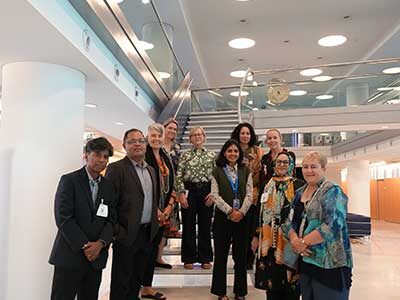
The growing use of artificial intelligence in weather and climate services is creating new opportunities to strengthen early warning systems. At the same time, ensuring that these technologies remain equitable, trusted and responsive to local needs is essential.
These themes were explored during the session “Integration of AI in Early Warnings for All: Addressing Equity, Trust, and Local Knowledge Systems,” held in Cape Town, South Africa, as part of the Sustainability Research and Innovation Congress 2026. The session brought together experts and practitioners to discuss how AI can support early warning systems while keeping people and communities at the centre.
Katharine Vincent Highlights the Human Dimension of AI
Katharine Vincent of Kulima Integrated Development Solutions and a member of the WWRP PEOPLE Project Local Task Team presented a Southern African climate services perspective on the role of AI in people centred early warning systems.
Katharine emphasized that early warnings need to be timely, understandable, actionable and trusted to support effective decision making. AI can contribute by improving the speed and accessibility of warnings, tailoring information to specific audiences, and supporting communication in multiple languages and formats. However, she also highlighted the need to avoid reinforcing existing digital divides, particularly for people who may have limited access to mobile phones or digital technologies.
A central theme of her presentation was the importance of trust, human connection and co production. Drawing on experience from co-producing thunderstorm alerts, Katharine highlighted how sustained interaction and two-way learning between weather information providers and users can strengthen confidence in forecasts and warnings. AI can improve efficiency and information delivery, but it cannot replace the human relationships and local understanding that help make warnings meaningful and actionable.
She concluded by emphasizing that the focus should not only be on using AI to improve information, but on using it strategically to make early warning systems more equitable, trusted and actionable, while freeing human capacity for dialogue, co production and trust building.
The session provided valuable perspectives on the opportunities and challenges of AI in advancing Early Warnings for All, reinforcing the importance of combining technological innovation with local knowledge, community engagement and strong human connections.
The discussion closely reflects the goals of the WWRP PEOPLE Project, particularly its emphasis on equity, trust and people-centred early warning systems. The session highlighted that AI can improve the accessibility, speed and relevance of warnings, but should not replace the human relationships, community engagement and co-production needed to build trust. By exploring how AI can support more accessible, actionable and locally relevant warnings while maintaining human connections, co-production and community engagement, the session highlighted key principles that underpin PEOPLE’s work. Katharine Vincent’s presentation particularly reinforced the importance of combining technological innovation with local knowledge and two-way dialogue to ensure that warnings are not only technically effective, but also understood, trusted and actionable for the communities they serve.
Watch the Recording
The full session recording is now available on YouTube: