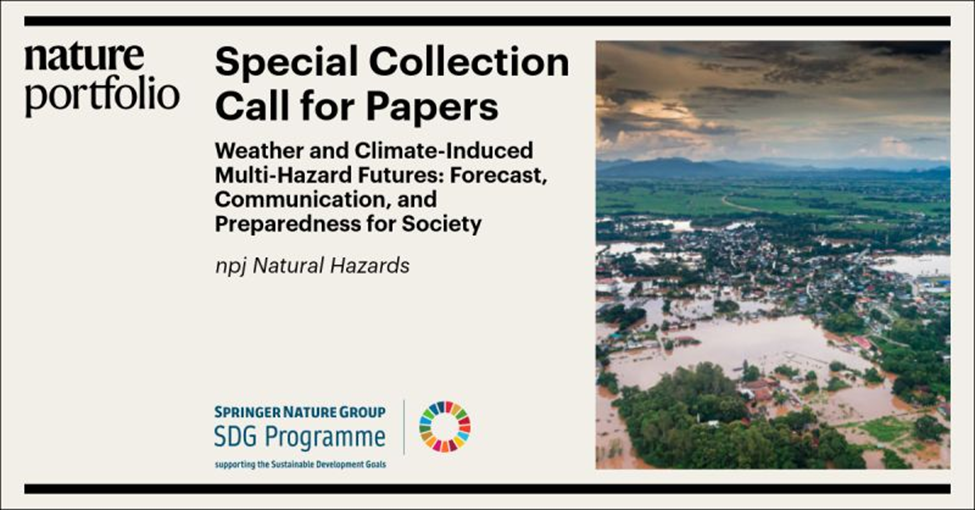
Full details about the Collection are here: https://lnkd.in/g5H9_nuD.
Early submissions are welcome and the deadline is 30 September 2026.

Please clickhere or scan the QR code to visit our website
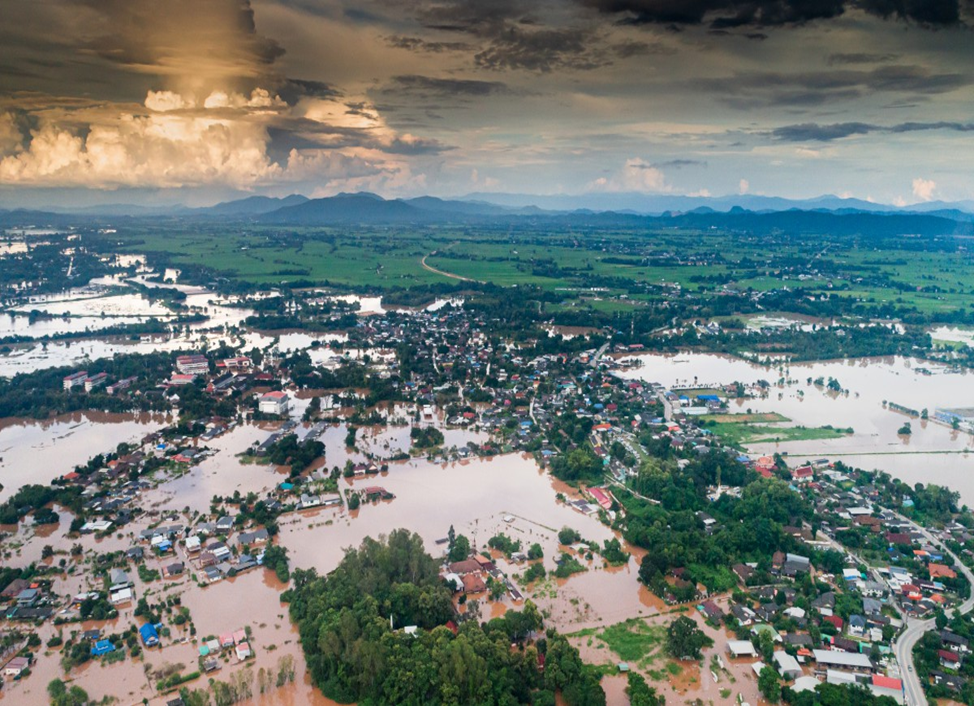
Weather and climate induced extremes are increasingly driving compounding and cascading hazards that affect lives, livelihoods, infrastructure, and ecosystems worldwide. Society now faces a deeply interconnected multi hazard future in which events such as heatwaves, floods, storms, landslides, droughts, and coastal surges interact across space and time, amplifying risks and producing systemic and cross sectoral impacts on people and critical systems. At the same time, decision makers are expected to respond more rapidly and equitably while operating under limited capacities, uneven access to information, and deep uncertainty, from real time emergency response to long term adaptation and investment planning.
This Collection focuses on the social dimensions of evolving multi hazard risks, including warning chains, governance, decision making processes, and the inequalities that shape access to effective weather and climate services. A central ambition of this Collection is to advance people centered and locally grounded early warning and preparedness approaches that emphasize justice, ethics, and inclusion. It highlights equitable access to information, capabilities, and decision-making processes. Contributions are encouraged that examine how multi hazard forecasts and projections can be translated into usable, context specific information for communities, practitioners, and policymakers. Research integrating scientific, Indigenous, and local knowledge to strengthen preparedness, agency, and locally led decision making is particularly welcomed.
We seek interdisciplinary submissions spanning a wide range of natural hazards, including floods, droughts, tropical cyclones, severe storms, heatwaves, landslides, debris flows, coastal and compound events, avalanches, and space weather, with a clear focus on societal implications. Studies linking short term weather information with seasonal and climate scale information, and exploring decision making across multiple timescales, are particularly encouraged.
Article Types
We welcome Original Research articles, Reviews, Perspectives, and Comments addressing, but not limited to, the following themes:
- Multi-hazard, compounding and cascading weather- and climate-related risks and their societal consequences
- Co-production, co-design, and evaluation of weather, climate, and impact-based services with user communities
- Social vulnerability, inequality, justice, and ethics in early warning systems, evacuation, and preparedness
- Governance, institutions, and policy processes shaping the design, financing, and implementation of weather and climate services
- Case studies and comparative analyses of warning chains and decision-making under uncertainty, including lessons from recent extreme events
- Community-led, Indigenous, and local knowledge systems in hazard monitoring, communication, and preparedness.
This Collection is a joint effort by npj Natural Hazards Nature Portfolio; the Societal and Economic Research Applications (SERA) Working Group of the World Meteorological Organization Weather Research Programme (WWRP); the WWRP Progressing EW4All Oriented to Partnerships and Local Engagement (PEOPLE) Project; WCRP Regional Information for Society; the UNESCO- and WMO WWRP-endorsed Seamless Prediction and Services for Sustainable Natural and Built Environments (SEPRESS) Programme led by The Hong Kong University of Science and Technology; and the International Centre for Integrated Mountain Development (ICIMOD). Mountain Research Initiative (MRI) Mountain Sentinels Mountain Partnership of the United Nations Natural Hazards Center Center for Global Mountain Safeguard Research – GLOMOS / Eurac Research United Nations Office for Disaster Risk Reduction (UNDRR)
Guest Editors: Rongkun Liu (International Centre for Integrated Mountain Development, Kathmandu, Nepal) and Irasema Alcántara-Ayala (Co-Chair of the PEOPLE Project, Mexico).